
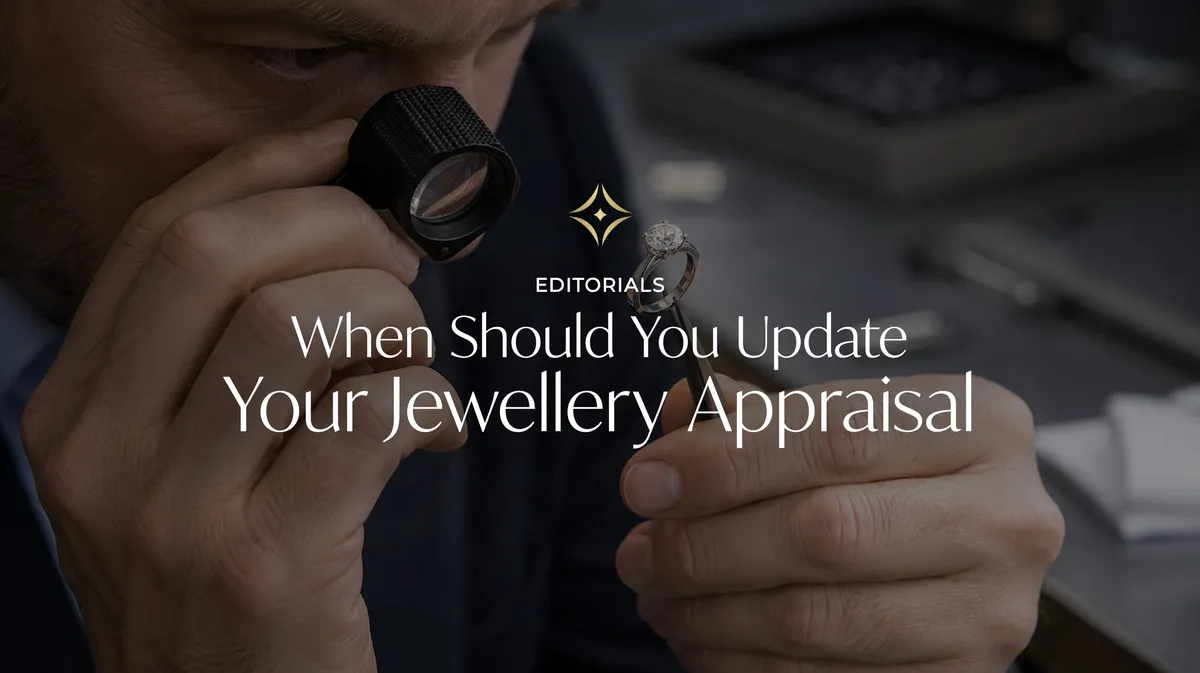
Fine jewellery is made to endure, carrying the memories of life's most significant moments from one generation to the next. Its appraised value, however, does not remain fixed. Precious metal prices move, gemstone markets evolve, and the cost of skilled craftsmanship changes over time. Even the piece itself may be altered through wear, repair, or redesign.
At La Mine d'Or, we believe protecting the story of a treasured piece begins with understanding and documenting it properly. A jewellery appraisal should be treated as a dated professional opinion, not a lifetime document. Keeping it current can help you understand what you own, maintain appropriate insurance coverage, and provide clearer documentation if your jewellery is ever lost, stolen, or damaged.
How Often Should You Update a Jewellery Appraisal?
As a general guideline, consider updating an insurance appraisal every three to five years. Many professional appraisers recommend this interval because precious metal prices, gemstone values, manufacturing costs, and market conditions can change over time.
This is a sensible starting point, not a universal rule. Your insurer may require a different schedule, and certain events can make an earlier appraisal worthwhile. Always confirm the documentation requirements and coverage limits of your individual policy with your insurance professional.
Why Does a Jewellery Appraisal Become Outdated?
An insurance appraisal usually estimates the current retail replacement value of a piece. This is the amount it may cost to replace the jewellery with an item of comparable kind and quality in the relevant market. That figure can change even when the jewellery looks exactly the same.
An outdated appraisal may create one of two concerns:
- Underinsurance: If the cost of a comparable replacement has risen above the insured limit, a settlement may not cover the full replacement cost, depending on the policy.
- Overinsurance: If the appraisal is unnecessarily high or no longer reflects the appropriate market, you may pay premiums based on more coverage than you need without being guaranteed that amount in a claim.
The goal is not to obtain the highest possible number. It is to arrive at a well-supported, realistic value for the appraisal's intended purpose, accompanied by a detailed description of the piece itself.
When Should You Update Your Appraisal Sooner?
1. The Piece Has Been Repaired, Reset, or Redesigned
Replacing a centre stone, changing a setting, adding diamonds, shortening a chain, or rebuilding a worn ring can alter the jewellery's description, condition, and value. Once the piece no longer matches the existing document, the appraisal should be updated so the written record and photographs reflect what you own today.
If your jewellery requires restoration before it is appraised, learn more about La Mine d'Or's jewellery repair services. For a more substantial transformation, explore our custom jewellery experience.
2. The Market Has Moved Significantly
The prices of precious metals, natural gemstones, signed jewellery, vintage pieces, and specialised workmanship do not all move in the same direction or at the same pace. A meaningful change in the market may justify updating an appraisal before the usual three or five-year mark. Ask a qualified appraiser or your insurer whether recent changes are material for your particular piece.
3. You Inherited Jewellery With Limited Documentation
An old receipt, family story, or laboratory report can provide useful background, but it may not establish present replacement value. A professional appraisal can document the item's materials, gemstones, construction, condition, and identifying characteristics while assigning a value for a clearly stated purpose.
This can be especially important for estate jewellery, where age, craftsmanship, provenance, condition, and market context may all contribute to a complete description.
4. Your Insurer or Policy Has Changed
Home and tenant policies may place special limits on jewellery, particularly for theft. Higher value pieces may need to be individually listed through an endorsement or a separate jewellery policy. If you change insurers, revise your coverage, or are asked for newer documentation, arrange the appraisal promptly and send the completed report to your broker or insurer.
5. Your Current Appraisal Is Vague or Incomplete
A single value accompanied by a short description may not be enough to identify or accurately replace a distinctive piece. If the report omits important information such as metal fineness, gemstone details, measurements, condition, or photographs, it may be time for a more comprehensive appraisal, regardless of its date.
6. The Purpose of the Valuation Has Changed
An insurance replacement appraisal is not automatically appropriate for resale, estate administration, equitable distribution, donation, or another legal or financial purpose. Each assignment may require a different definition of value and a different market. Tell the appraiser exactly why the report is needed so the correct approach can be used.
Is an Appraisal the Same as a Diamond Grading Report?
No. A diamond or gemstone laboratory report describes identity and quality characteristics, but it does not assign a monetary value. An appraisal considers relevant gemological information and market research to reach an opinion of value. A laboratory report may support an appraisal, but it does not replace one.
Likewise, a purchase receipt shows what was paid at a particular time. It may help establish ownership and provide background, but it is not necessarily evidence of current replacement value.
What Should an Updated Jewellery Appraisal Include?
A strong report should be detailed enough for another qualified professional to understand what is being valued. Depending on the item and purpose, it may include:
- The appraisal date and its intended use
- A clear description of the jewellery and its construction
- The metal type and fineness
- Gemstone identity, quantity, measurements, estimated weights, and relevant quality characteristics
- The item's condition and any important limitations or assumptions
- Clear photographs and identifying details, including serial or report numbers when applicable
- The value conclusion and the market or value basis used
- The appraiser's signature, qualifications, and contact information
Bring previous appraisals, receipts, repair records, and laboratory reports to the appointment. These records provide helpful context and allow the appraiser to prepare the most complete description possible. Keep digital copies of the finished appraisal and photographs in secure cloud storage, with physical records stored separately from the jewellery.
Professional Jewellery Appraisals at La Mine d'Or
La Mine d'Or offers professional jewellery appraisal services at both our Downtown Moncton store and our Halifax showroom. Whether you are documenting a newly acquired piece, updating an older appraisal, or seeking current information for insurance purposes, our team will guide you through the process with care and discretion.
During an appraisal, the jewellery is carefully examined and documented. Depending on the piece, the report may include its construction, metal type, gemstone characteristics, condition, identifying details, photographs, and an opinion of value prepared for the stated purpose. This creates a meaningful record of the piece as it exists today.
Downtown Moncton Appraisals
41 Botsford Street
Moncton, New Brunswick
(506) 857-1980
Appraisal services are available at our Downtown Moncton location. Please contact our Moncton team in advance so we can discuss your jewellery and arrange an appropriate appointment.
Halifax Appraisal Appointments
276 Bedford Highway, Suite 101
Halifax, Nova Scotia
(902) 457-4745
Our Halifax showroom welcomes clients by appointment. Jewellery appraisal appointments are typically offered on the second Wednesday of each month. Dates and availability may vary, so we recommend contacting the showroom in advance to reserve your appointment and confirm the upcoming appraisal date.
Appraisal Updates and Jewellery Maintenance
An appraisal may reveal loose prongs, worn settings, or other condition concerns, but it is not a substitute for regular care. Consider arranging a professional cleaning and inspection each year, along with an annual review of your insurance coverage. That yearly check is an ideal time to confirm when each valuable piece was last appraised.
A Simple Jewellery Appraisal Schedule
Review your coverage and arrange a professional inspection once a year. Update the appraisal every three to five years, or earlier whenever the jewellery, its market, or your insurance requirements materially change.
The most valuable part of an appraisal is not simply the number at the bottom of the page. It is the accurate, current record of the piece itself, including its materials, craftsmanship, condition, and defining details. When that record is kept up to date, the jewellery's story is better protected along with its value.
If it has been several years since your jewellery was last appraised, or if the piece has been repaired, redesigned, or newly inherited, we invite you to connect with La Mine d'Or. Our teams in Moncton and Halifax will help you arrange an appraisal appointment and ensure your treasured piece is documented with the attention it deserves.